
Retina Glaucoma Center & Superspecialty Eye Hospital › Services › Intravitreal Injection
Intravitreal Injection is a safe, minimally invasive procedure in which medication is injected directly into the eye to treat retinal diseases such as diabetic retinopathy, age-related macular degeneration (AMD), and retinal vein occlusion. It helps reduce swelling, prevent vision loss, and preserve eyesight.
Our specialists are available 6 days a week for in-person and virtual consultations.
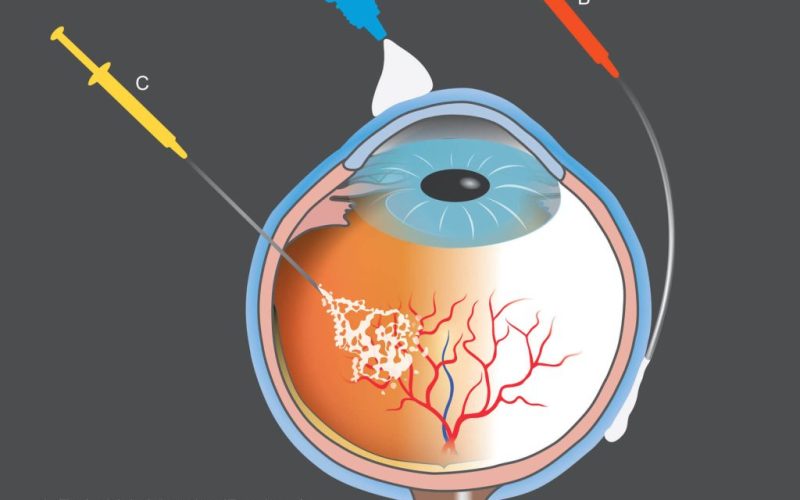
Some of the most serious and vision-threatening conditions affecting the retina respond best to medication delivered directly into the eye itself. Intravitreal injections place powerful anti-VEGF drugs, steroids, or other therapeutic agents precisely into the vitreous cavity — right next to the retina where they are needed — achieving concentrations and effects that eye drops or tablets simply cannot reach. At RGC Eye Hospital, these injections are performed with strict sterile technique, minimal discomfort, and the highest standards of care.
An intravitreal injection is the delivery of a small volume of medication directly into the vitreous cavity — the gel-filled space inside the eye. A very fine needle is used to introduce the medication through the white of the eye at a safe and precisely chosen location. The procedure takes only a few minutes and, with proper anaesthesia, is far more comfortable than most patients expect. The medications used work by blocking the chemical signals that drive abnormal vessel growth, reduce leakage, or control inflammation within the eye.
The eye and surrounding area are thoroughly cleaned with antiseptic solution. This strict sterile preparation is the most important step in preventing infection.
Numbing drops are applied to the eye surface. In some cases, a small amount of local anaesthetic gel is also applied to maximise comfort during the procedure.
A very fine needle is used to deliver the medication into the vitreous cavity through a carefully chosen point on the white of the eye. The injection itself takes only a few seconds. Most patients feel only mild pressure — not pain — during this step.
Antibiotic drops are applied and you rest briefly before being assessed. Most patients are able to go home within 30 minutes of arriving for the procedure.
The frequency of injections depends on the condition being treated and how your eye responds. Many conditions require an initial course of monthly injections followed by a maintenance phase where injections are given less frequently. Your specialist will review your response at each visit and adjust the treatment schedule accordingly to achieve the best possible outcome with the minimum number of injections.
Need eye care? Contact us today.
East side of BRB Hospital, 57/E Panthapath, Dhaka-1215
Call Now