
Retina Glaucoma Center & Superspecialty Eye Hospital › Services › Cataract Surgery Or Phaco Surgery
Cataract surgery involves replacing the cloudy lens inside your eye with an artificial one. It has a high success rate in improving your eyesight. It can take 2 to 6 weeks to fully recover from cataract surgery.
Our specialists are available 6 days a week for in-person and virtual consultations.
Imagine waking up every morning and seeing the world clearly — the faces of your loved ones, the colours of nature, the words on a page. For millions of people, a condition called cataract slowly steals that clarity away. The good news is, it doesn’t have to stay that way. At RGC Eye Hospital, we give you your vision back — safely, gently, and permanently.
Inside your eye sits a natural lens — crystal clear in your younger years. Over time, this lens begins to cloud over, like a foggy window that no amount of cleaning can fix. This cloudiness is called a cataract. It makes the world look dull, blurry, and washed out. You may struggle to drive at night, read a book, or recognise a face across the room. Cataracts are painless and develop slowly, which is why many people don’t even realise how much their vision has deteriorated — until they finally get it treated and see the difference.
You don’t have to wait until your vision is seriously affected. Watch out for these early warning signs:
If any of these sound familiar, it’s time to come in for an eye check.
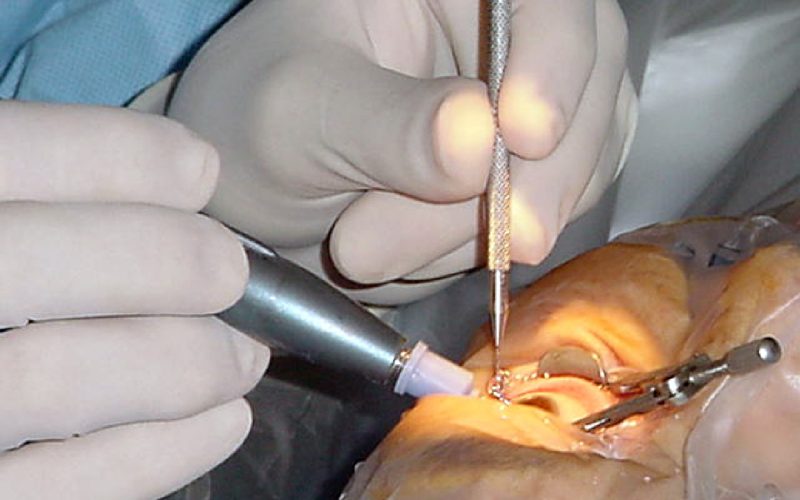
At RGC Eye Hospital, we use the most advanced cataract removal technique available today — Phacoemulsification, commonly known as Phaco Surgery. Here’s what happens, step by step:
Your eye is numbed with local anaesthesia. You’ll be awake but completely comfortable throughout the procedure.
A very small opening — just 2 to 3 millimetres — is made at the edge of your cornea. No stitches are needed afterward.
A tiny ultrasound probe is gently inserted through the incision. It uses sound waves to break the cloudy lens into microscopic fragments, which are then carefully suctioned out.
A clear, foldable artificial lens — called an Intraocular Lens or IOL — is then placed inside your eye through the same small incision. It unfolds perfectly into position.
The entire procedure takes just 15 to 20 minutes. No stitches, no overnight stay, no lengthy recovery.
Not all lenses are the same. At RGC, our specialists will guide you in choosing the lens that fits your lifestyle and vision needs:
Designed for clear vision at one distance — usually distance vision. You may still need reading glasses for close work, but your far vision will be sharp and clear.
Gives you the ability to see clearly at multiple distances — near, intermediate, and far — reducing or even eliminating your need for glasses altogether.
Specifically designed for patients who also have astigmatism. It corrects both the cataract and the uneven curvature of the cornea at the same time.
Recovery from Phaco Surgery is remarkably smooth. Most patients notice an improvement in their vision within 24 hours. Within a week, vision continues to sharpen and settle. You can return to light daily activities almost immediately, and most patients are back to their normal routine within just a few days. Our team will provide clear aftercare instructions and schedule follow-up visits to make sure your recovery goes perfectly.
We understand that eye surgery can feel like a big decision. At RGC, we make sure you feel informed, comfortable, and confident every step of the way:
Need eye care? Contact us today.
East side of BRB Hospital, 57/E Panthapath, Dhaka-1215
Call Now